In a tunnel or a hall, every pneumatic hammer echoes twice as loud. At the same time, special rules apply here for fire protection, escape routes and logistics. With hired flame-retardant acoustic mats and mobile screens you reduce the noise in a targeted way – without having to invest in a system of your own.
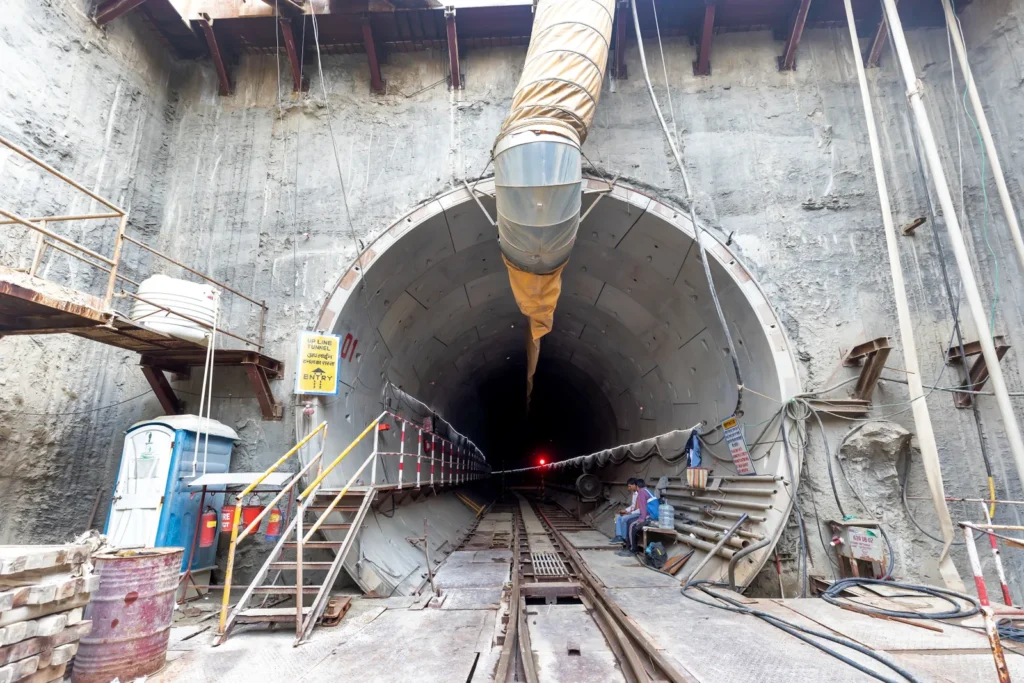 Photo: Pexels
- up to 23 dB, depending on the system
- flexible, project-related hire periods
- installation optional by arrangement
- delivery across Europe
Flame-retardant acoustic mats for hire
For projects with increased fire protection requirements we offer flame-retardant versions. Depending on the system, the mats are mounted on temporary fencing, support frames or specially planned structures. We agree the specification, the documentation and the installation with you in advance.
- flame-retardant versions for special areas of use
- flexible hire periods for construction sections, maintenance and overhauls
- various sizes and systems
- delivery and collection to suit your schedule
Where the noise control is typically used
Wherever loud work is carried out for a limited time: during tunnel driving, drilling, sawing and chiselling, during work on railway and underground facilities, or when compressors, pumps and generators are running. During conversions in halls, work zones can also be separated from neighbouring areas in this way.
- tunnelling, tunnel refurbishment and shaft works
- underground, railway and infrastructure projects
- interior demolition and building refurbishment
- maintenance and overhauls in industrial halls
- screening of individual machines and power units
Plan fire protection, access and ventilation
In tunnels and buildings the noise control has to fit into the safety concept. Escape routes, doors, passages, lighting, ventilation and access to technical equipment must not be blocked. Clarify the necessary fire protection documentation and approvals with site management, safety coordination and, where applicable, the authorities before installation.
For the design we need details of the noise source, location, length and height, fixing options, duration of use and fire protection requirements. Photos or a sketch help a great deal.
Wall or enclosure?
A mobile wall interrupts the direct sound path between the noise source and the neighbouring area. For a single loud machine, a partial or complete enclosure often makes more sense. Heat, air supply, exhaust gases and maintenance access then have to be considered as well. We help you choose.